
PVC (Polyvinyl Chloride) is a material of synthetic origin (polymer), versatile, durable, resistant to fire and corrosion, recyclable and represents the third most popular plastic product in the world, after polyethylene and polypropylene. Recent independent research commissioned by ecvm (European council of vinyl manufacturers), a division of Plastics Europe, the European association of plastics manufacturers, which represents 100% of plastic manufacturers in Europe, has brought out a truly astounding result: PVC, compared to other natural materials such as wood and metal, would look like the best product in terms of costs–benefits. The study shows that in three major construction sectors such as windows, floors and pipes, pvc is not only the most "effective" solution in terms of installation costs, but it is also the best choice for life cycle compared to other materials.
In fact, it emerges from the study that PVC proves to be a very ecological material in terms of environmental impact over its entire life cycle, demonstrated in terms of Ger (energy demand) and Gwp (Global warming potential - greenhouse gas emissions). It therefore has advantages in terms of total energy consumption and CO2 emissions.
It is a pity, however, that the study was commissioned by the producers themselves, with easily understandable purposes, and not by third-party and impartial institutes for the protection of citizens.
It is a material present in many domestic and working environments in various forms and functions. But an increasing number of people and researchers are highlighting the damage that PVC entails, its real danger and the risk to human health associated with the use of the material, which is often also used in construction.
POSITIONS AGAINST PVC
According to a study by "The center for Health, Environment and Justice", a US company in defense of consumers, PVC is not to be considered an environmentally friendly material at all. It would in fact be responsible for many tumors and fetal malformations. The fact that many companies over the years have evaluated the opportunity or chosen to remove the use of polyvinyl chloride from the production processes would represent irrefutable proof of this (for example - IKEA, Microsoft, Apple, Carnegie Fabrics Finishes etc - see list Source CHEJ).
According to the CHEJ " PVC is harmful to human health and to the entire ecosystem throughout its life cycle, from the factory, to use, up to disposal. Our bodies are contaminated by additive, poisonous chemical particles such as mercury and phthalates (toxic softeners that make it flexible and whose use in children's games was banned by the European Community in 2005 due to the health risk, but which continues to be used in the USA under an agreement between the Department of Commerce and US toy manufacturers) which can cause our lives to be shortened and irreversible. When PVC is made or burned, it releases dioxins, a group of the most potent chemicals ever tested, which can cause cancer as well as attack the immune system and the reproductive system.''
And still with regard to its recycling, the CHEJ claims: ''The PVC it cannot be effectively recycled due to the additives used in the manufacturing process to make it strong and flexible as these contaminate the whole process. Many consumers do not know that the 3 symbol on plastic means PVC, and therefore recycling these products makes little sense as you would end up with unusable containers. Indeed a single bottle of PVC manages to contaminate a recycling process of 100,000 PET bottles.”
Therefore what emerges clearly is that PVC would be technically simple to recycle like other plastics but what produce the greatest health problems are the additives used in the processing to make it more malleable and workable, putting the entire process at risk of recycling.
Another element of reflection is represented by the choice of places for the production of polyvinyl chloride. In fact, PVC manufacturing plants are located in concentrations of low-income communities and those of color, and from scientific testing in such areas there would appear to be a clear correlation between health and pollution from PVC additives. The CHEJ argues, inter alia: “….In 1999, the federal government measured the amount of dioxins in the blood of 28 individuals living near one of these plants in Louisiana. The test revealed that their blood contained levels three times that of the average US citizen. Workers in these plants risk harm to health from exposure to polyvinyl chloride and other additives used in the manufacturing process. Such health risks include angiosarcoma of the liver, lung cancer, brain cancer, lymphomas, leukemias, and cirrhosis of the liver.”

Photo 2, Baerlocher explosion, PVC additives factory.
IN FAVOR OF PVC
The positions in favor of polyvinyl state that many of the reasons brought against its use are unfounded and have a political origin. The reasons in favor are mostly of an economic nature and in particular are aimed at the ease of cleaning which make it a key material - for example - in the health sector. In this field of application it is used in various ways – from the walls of operating rooms to blood bags, up to surgeons' gloves. Indeed, if PVC were really a plastic harmful to human health, we would all be in serious danger.
According to Dr. Patrick Moore, one of the founders of Greenpeace ''the evidence of danger to human health has been rejected by the European Commission, by in-depth studies on polyvinyl and also by the green building council of the United States, a group of activists in various fields, which have refuted the criticisms leveled at polyvinyl.'' However, this statement seems to be in clear contrast with a Community directive which forbids the use of additives commonly present in the material in the production, for now, of children's toys.
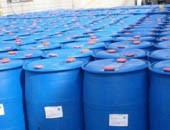
Photo 3: Storage
Furthermore, Moore argues that PVC is composed only of 50% from fossil fuels, while the other types of plastic are composed of 100% from fossil fuels with a strong reduction on global warming. And because it can be recycled, he continues: “…Activists who claim that polyvinyl cannot be recycled are wrong approximately 100% of its processing waste is reused”. Therefore, polyvinyl can be produced and recycled reducing the energy requirement and consequently causing less damage to the environment; but this is true with respect to alternative plastics and not to natural materials.
One of the accusations leveled against the PVC industry is the impossibility or difficulty of recycling. Moore points out that PVC, having a basically infinite life cycle, is the least recycled. Therefore he states: ''Not much consumer polyvinyl is recycled. Ask yourself why? Because they still use it. And therefore it makes little sense to make these accusations against the PVC industries about recycling, when, thanks to its durability, it is still in houses, in water pipes, as an insulating material. It does not need to be recycled because it is still used thanks to its resistance over time.''
It is not recycled because there is no need! Hm….
Interesting is the position, albeit biased, of the PVC Forum Italy, PVC Information Center that; in short, we must forget about the old PVC (therefore it is a form of acknowledgment of real problems) and look to the future, in terms of social and environmental eco-sustainability. The conclusions of a conference are quite eloquent:
- We have to look at NEW PVC (PVC 2.0 or PVC 3.0) as something other than the OLD PVC produced years ago and therefore Evaluate/Manage it differently;
- The Vinyl 2010 programme, with its “environmental” innovations, has led to the start of a path that has given us a more sustainable and socially and economically more important PVC: PVC 2.0.
- The new VinylPlus program makes it possible to imagine that at the end of the new path there will be a further evolution of the material passing from PVC 2.0 to PVC 3.0. “
